 With the COVID-19 outbreak, the American Dental Association has recommended that dentists concentrate on emergency dentistry procedures. The coronavirus responsible for the disease has been detected in the saliva of affected patients. Dental professionals generate aerosols during dental procedures and may end up providing dental care unknowingly to infected but asymptomatic and yet-to-be-diagnosed patients. It is, therefore, important that dentists observe necessary sterilizing procedures to curtail the spread of the disease.
Important sterilizing procedures
Below are the best practices that dentists show follow to ensure proper sterilization of dental instruments. This will help minimize the risk of infection transmission.
Use of personal protective equipment (PPE)
This includes face masks, gloves, safety eyewear and impermeable smocks to serve as a shield from microbial contamination when cleaning or organizing the tools. It also prevents the dental practitioner from passing any infectious agent onto the instruments. Utility gloves are critical when sterilizing dental instruments to prevent accidents. The gloves should be resistant to punctures and chemicals and can be sterilized in a steam autoclave.
Pre-soak the tools
Some busy practices may find it hard to clean the tools instantly after emergency dentistry procedures. This can be a problem because debris like blood can dry out and harden on the instrument. According to the Center for Disease Control, it is crucial to spray soiled instruments with a solution like enzymatic spray gels to break any buildup of biological debris (including blood) until it is time to clean the tools properly.
Clean before steaming
If the debris stays on the tools before they are transferred into the autoclave, the superheated steam may not reach the entire surface of the instrument. Therefore, the CDC guideline demands cleaning visible elements from tools before sterilizing them. The methods of doing this include the following.
Ultrasonic cleaning: This method uses waves to produce oscillating bubbles in an appropriate ultrasonic solution to remove debris. The solution is designed for proper cleaning and contains enzymes to disintegrate bioburden and agents to stop corrosion, spotting and mineral buildup.
Automated instrument washers: These devices save time and ensure efficiency by removing the need to rinse or dry the instruments manually.
Dry and package the tools
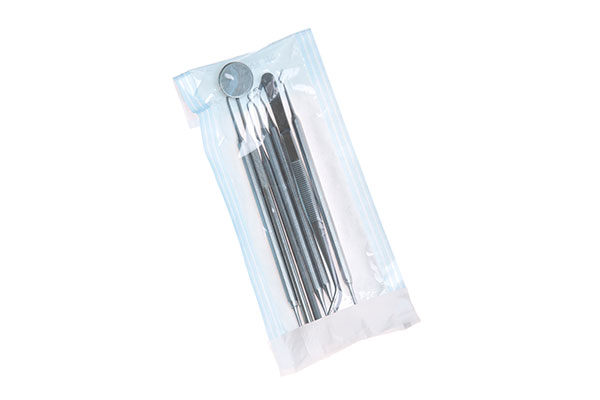
Before sterilizing in an autoclave, the instruments need to dry properly to prevent recontamination after sterilization. The instruments will be packaged in wraps or pouches, then sealed to stop exposure to air when they are removed from the sterilizer. The wrap should be one that allows the penetration of sterilization agents and can handle the harsh conditions of steam sterilization.
Load the tools carefully
The autoclave should not be overloaded, as it could cause failed sterilizations. Overloading makes it harder to attain optimum temperature and prevents the sterilization agent from reaching every surface of the equipment. The CDC recommends supervising the sterilization procedure to ensure proper disinfection.
Final note
Dental practices are better equipped to stop the transmission of COVID-19 infection by properly cleaning and sterilizing their instruments. The sterilization procedure keeps the dentist, patients and staff members safe from the disease. When patients come for emergency dentistry procedures, they can rest assured of safety throughout their treatment.